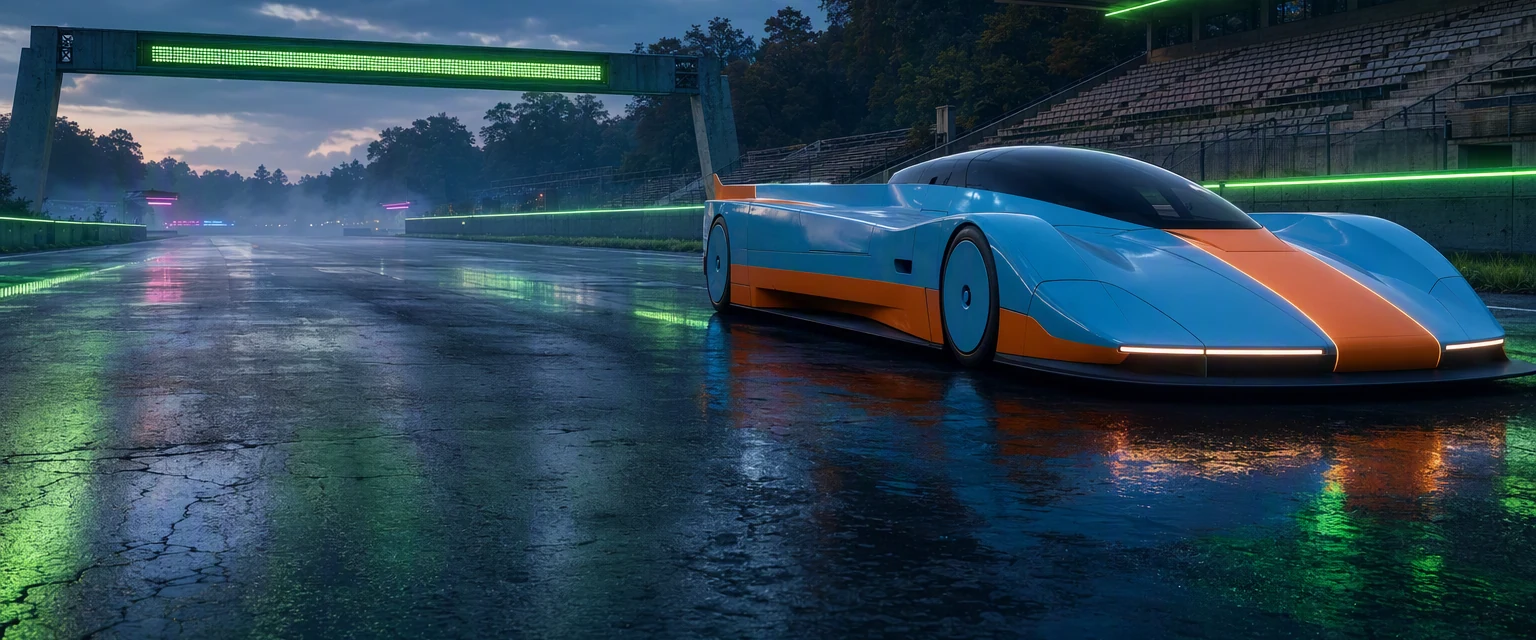
No contact
Your race is yours.
Player cars never collide. Another driver cannot erase your race with one missed braking point.
A collisionless competitive circuit racer with equal cars, distinct driver abilities, and a team result worth fighting for.
Playable concept in development
Overcut keeps the part of sim racing worth preserving: read the circuit, carry speed, manage the car, and execute under pressure. It stays demanding behind the wheel.
But the fastest individual is not the whole story. Overcut puts the team result at the center of the race. Equal machinery and driver abilities create choices about when to push, when to support, and how to bring the team home.
It is deliberately lighter than a full simulation, not because driving should be easy, but because competition can be serious without recreating every burden of real motorsport. Each feature below protects that balance.
No contact
Player cars never collide. Another driver cannot erase your race with one missed braking point.
Equal cars
Every car performs identically. Liveries change identity, not the machinery underneath.
Team result
Individual places still matter, but the team competes to leave the race with the most points.
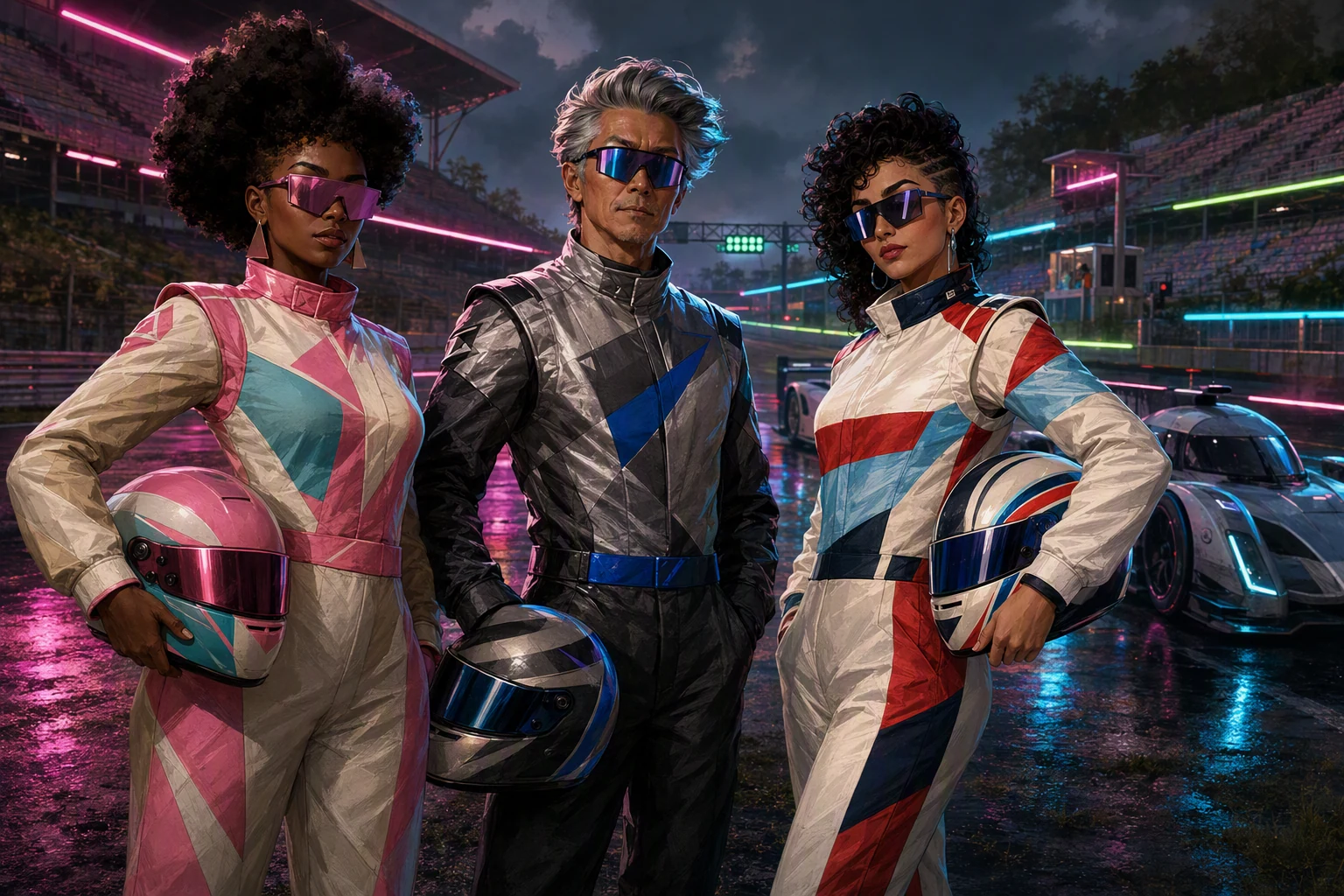
Like the agents in VALORANT, Overcut's drivers are defined in part by distinct abilities. The comparison is structural: abilities create choices, roles, and moments for coordinated play.
Overcut draws a hard line around what those abilities can do. They help you or your teammates. They never hinder a rival. No weapons. No blue shells. No button that ruins somebody else's race.
The exact effects, triggers, charge rules, and loadouts are still being designed. The principle is settled. The implementation is not.
Collisionless does not mean consequence-free. Overcut protects the race from contact, not the driver from the clock.
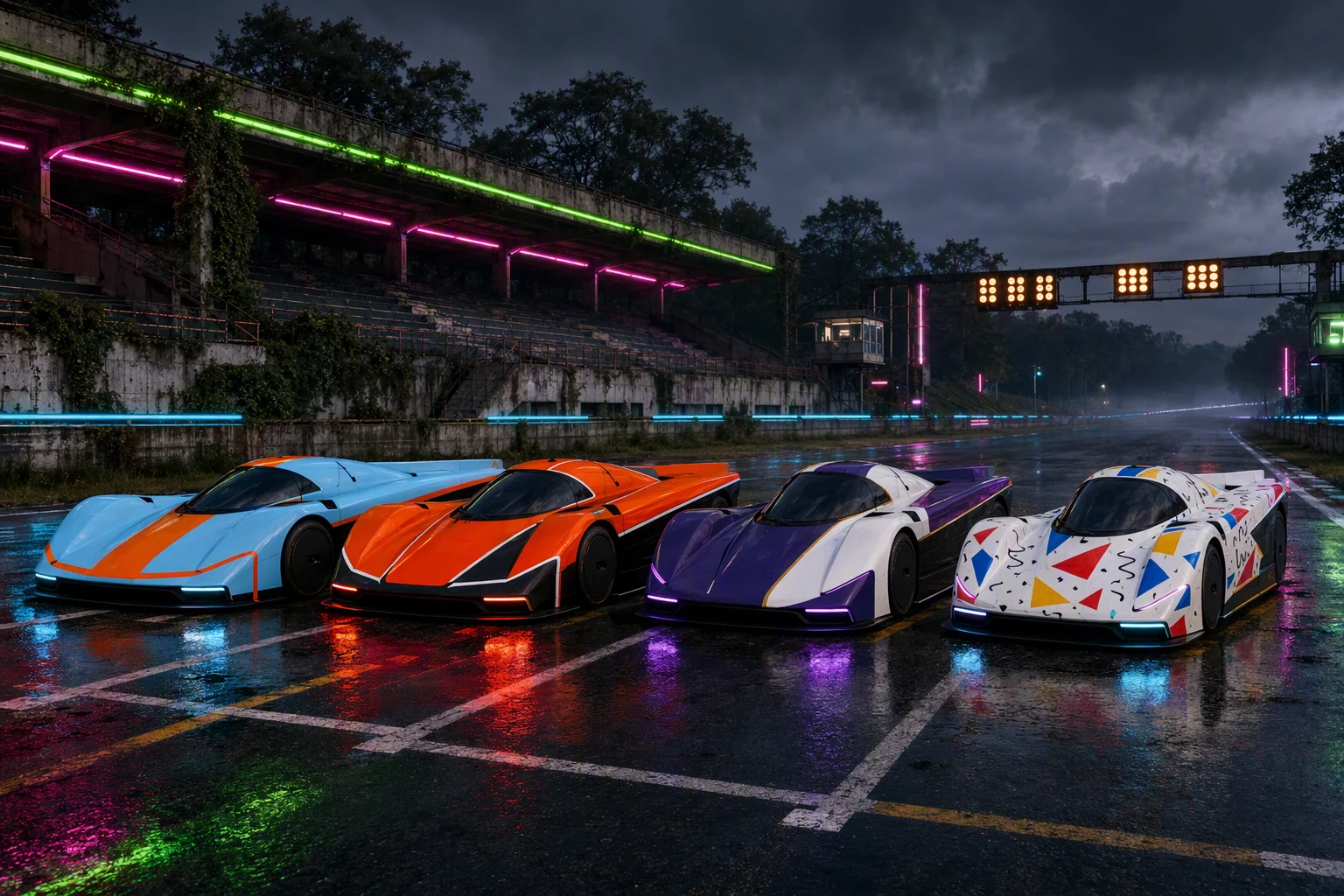
Concept art. Liveries vary; performance does not.
Sim racing often rewards hours spent tuning a setup for one car, circuit, and condition. Overcut removes that homework from the competition.
Every car starts on equal footing. Teams and drivers can look distinct, but a faster livery does not exist. The advantage has to come from the people inside the cars and the choices they make together.
That is the question Overcut exists to answer. It is a playable concept, not a promise to recreate the most uncompromising simulations or become an arcade racer.
The driving should still ask for practice, precision, and pace. The rules around contact, setup, recovery, abilities, and scoring are lighter by design so strategy and coordinated team play can matter just as much as outright speed.
If serious driving, distinct driver abilities, and a shared result can stay competitive and feel fun together, the concept earns the right to keep growing. The point is to prove that idea by making it playable.
Overcut is a solo-built concept focused on testing its central racing ideas. Development progress, tradeoffs, and lessons live in the build journal.
The work of human artists has value. AI-generated concept art lets a solo programmer develop Overcut, but it is not a substitute for that work. As long as any AI-generated art remains, neither the artwork nor the game will be monetized. If Overcut ever becomes commercial, that art will first be replaced with work created by people.
Racing has not represented everyone equally. Overcut is committed to building representation into its cast from the beginning. We will make mistakes and will not always get it right. The commitment is to keep listening, correcting, and trying, not to treat representation as a box checked once.
Overcut is in development. The journal covers what changes, what fails, and what the playable concept proves next.